Posts

Let me introduce you to TORM, the total ozone reactivity monitor

Image
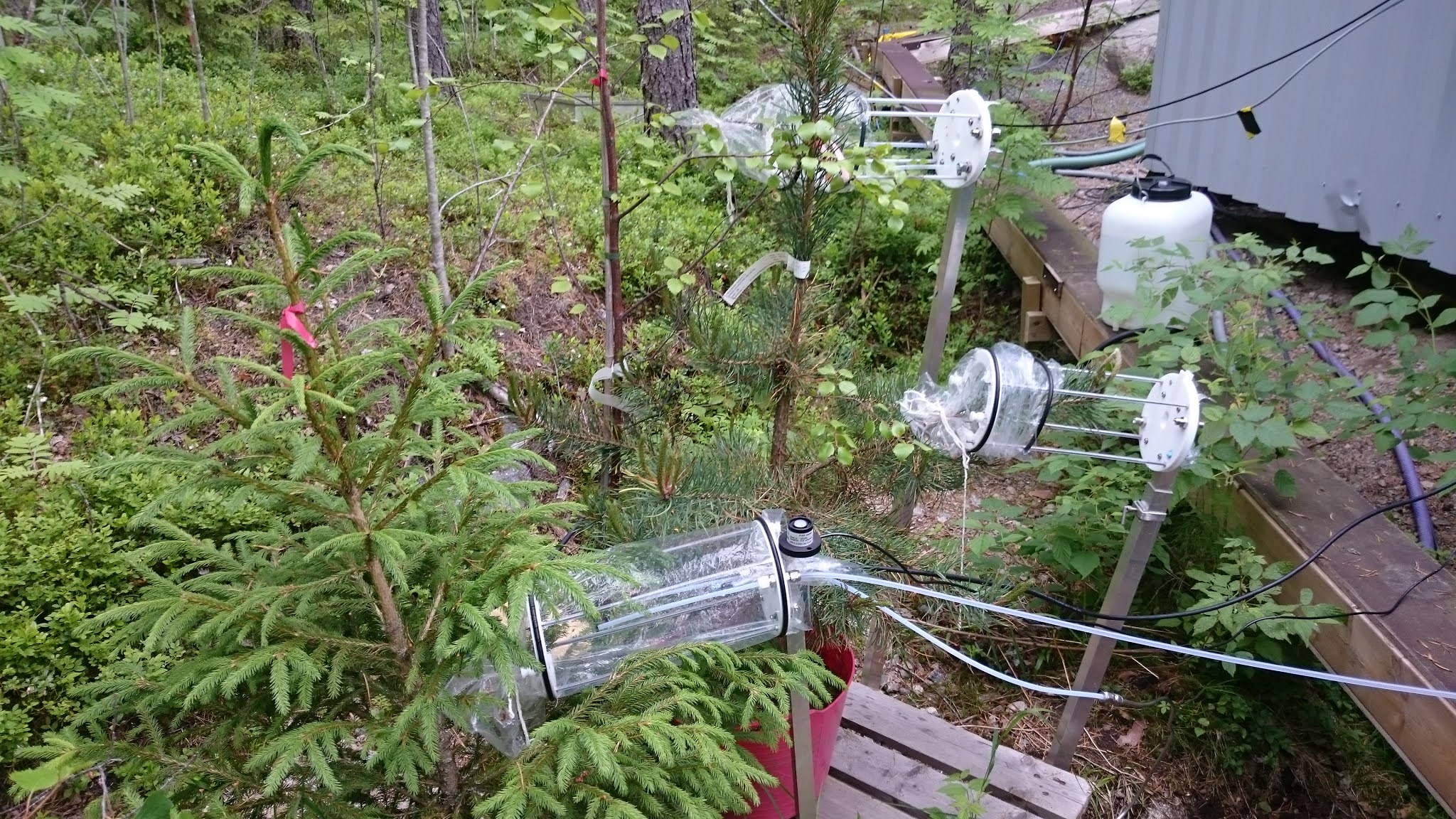
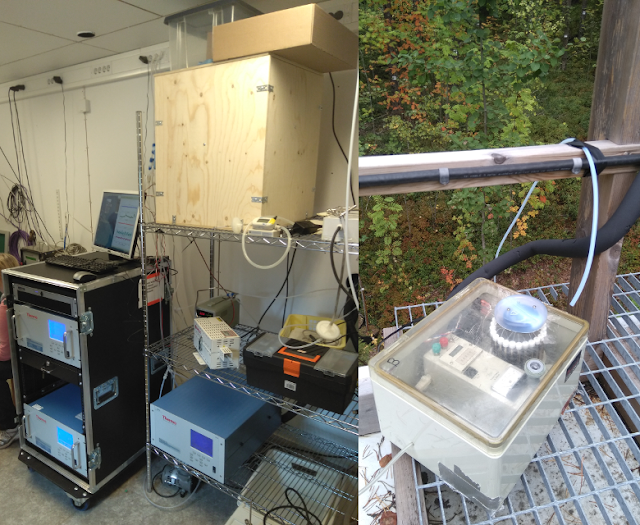
An important part of my Academy Research Fellow project (2017-2022) funded by Academy of Finland was the development of an instrument to measure total ozone (O3) reactivity. The paper describing the method we use, based on an idea by Dr. Detlev Helmig, and developed together with his group, has just been published in Atmospheric Measurement Techniques . At the time of my proposal submission in 2016, there had been only one publication on the topic of total O3 reactivity measurement by Prof. Jun Matsumoto (Waseda University, Tokyo, Japan). I was also aware of measurements that had been done by Dr. Helmig's group that had been presented at conferences. This is why I visited Prof. Matsumoto in Tokyo in December 2017 and then went to Boulder CO, U.S.A. , with Anssi Liikanen , in January 2018. Anssi stayed almost two months to work in Dr. Helmig's laboratory, performing many tests on the total O3 reactivity monitor (TORM).   Figure 1. Left: TORM at the Toolik Field Station, Alaska...

Out of words...

Image
Time flies and my blog has been silent for almost a year. Several times I have been wanting to write a post, but nothing materialized. Lately, I realized that I am sometimes "out of words". Are you too? When I applied for a position as a doctoral student at the Paul Scherrer Institute in 2008, I included at the bottom of my CV two awards for young writers that I got while I was at the university. I wrote short stories in my native language, French, and submitted them to writing competitions, because I always have liked to tell stories. These were work of fiction and a couple of times, I did get a prize. I remember that, towards the end of the interview, one of the interviewers made a comment about these awards and how it's nice to know that I am good at writing. At that time, I knew that I would have to write a thesis, but I had not realized the extent to which academia relies on people writing... almost all the time! Word cloud generated by wordart.com using the text fr...

Tree emissions of volatile compounds are complex and not fully understood

Image
In our latest publication, we investigated with total hydroxyl radical (OH) reactivity measurements our understanding of emissions from three tree species found in the boreal forest. The unexplained fraction of the reactivity remain high in some circumstances. We recently published in Biogeosciences the results of our study from 2017, where we analysed the emissions from three different trees with gas chromatographic methods and total OH reactivity instrumentation. We analysed emissions at the branch level with enclosure for birch, spruce, and pine. Our findings are that emissions do vary in amount and composition throughout the growing season and we could show, based on reactivity measurements, that the emissions are not fully characterized chemically. In particular when trees were subject to stress (that was clearly visible with, for instance, browning leaves or needles) the reactivity of the emissions increased a lot and we observed simultaneously an increase of emissions of Green L...

Online conference: the differences

Image
Rather than heading to Vienna as I did last year for the General Assembly of the European Geosciences Union, I attended its online replacement this year: Sharing Geoscience Online ( #shareEGU20 ). As everyone knows, online meetings should happen more often because it's better for the climate and because we do have the technology nowadays to make it happen easily. While some (including scientists) have already been taking advantage of this possibility for a while, the current pandemic is forcing almost everyone else to do the same. As most people, I happen to have been on video calls with a few people to discuss results from my research or plan upcoming measurement campaigns. However, I don't recall participating ever in an online conference before last week. I thought that I would make a short (and extremely subjective) comparison between the in-person and the online versions of the EGU General Assembly. Let me know in the comments about your own experience with this ...

Of good luck and bad luck...

Image
For many, 2020 will be remembered as quite a unique year, as many around the world are affected by the coronavirus pandemic and stay home for work, schools are closed, and everyone adapt to the unusual situation. In particular, for scientists, 2020 will be the year of the cancellations of not only international conferences, but also measurement campaigns. Last year, I was trying to organise a measurement campaign in Switzerland in 2020 for my projec t, but for various reasons, this was not possible. As an alternative, we decided to bring reactivity instruments (for both OH and ozone reactivity, the very first time this combination has been ever used to our knowledge) to Pallas in the Finnish Lapland in late March. As Anssi and I were preparing for the trip, COVID-19 slowly took on the news' cycle and Switzerland got hit quite badly by the pandemic. Did we just dodged a bullet? I guess we took a lucky decision without knowing. Still the first cases of COVID-19 were reported als...

Seasonality and knowledge gaps: Total hydroxyl radical (OH) reactivity measurements in the boreal forest

Image
After a long journey to get them published, the results of our hydroxyl radical (OH) reactivity measurements in the boreal forest in 2016 are now available in Atmospheric Chemistry and Physics . The final manuscript has been substantially modified from its discussion version, mostly to improve its readability and remove unnecessary parts. The most consequential changes did not severely impact our conclusions, though. Here I give a summary of the findings from our study that includes measurements at the SMEAR II boreal forest station in Hyytiälä, Finland, from April to July 2016, as well as modelling results from our colleagues at the University of Helsinki. We found large total OH reactivity values occurred when the soil was thawing after snow melted (late April). These reactivity peaks were even higher than the high total OH reactivity values in summer (July). Comparing the total OH reactivity measured with the OH reactivity calculated from the known chemical composition at ...

How I became a Finn

Image
After living here for over six years, I applied for Finnish citizenship in the spring and it was given to me on 21 August this year. In this blog post I am writing down a few personal thoughts about the process, how I feel about Finland, what this means to me now and to which extend it is related to my career. EU-citizenship Figure 1. The author as a newly naturalized EU-citizen visiting the European Parliament in Brussels for the first time. You have no idea how many people were wondering why I would apply for Finnish citizenship as a Swiss citizen. Well, it is true that Switzerland is in the Schengen area (even though it is not part of the EU) and that it was very easy to move to Helsinki in the first place. However, a few years back, before I was awarded my current fellowship, I considered alternative options to work outside of academia and as a chemist, I wondered if I could have worked for the European Chemical Agency (located in Helsinki). Except I couldn't as a Swi...

On amateur theatre and a scientific career

Image
I was recently interviewed by Helen Partti for the journal of my professional union ( Loimu ). The article is part of a series aiming at presenting what scientists do on their free time and how it is part of their work-life balance. I briefly mentioned my involvement in a theatre project in a previous post . Helen and I met on the day of the dress rehearsal for Apologia (by Alexi K. Campbell) produced in collaboration by Soup Troupe and The Really Small Theatre Company . I was the stage manager for this production. We talked for about one hour before the rehearsal and talked about my experience in amateur theatre (since my teenage years), my studies, my career, Finland, Switzerland, atmospheric chemistry, friendship, and possibly even other subjects. Eventually, Helen joined me to the theatre and stayed with us for a while, talking to actors and the director, while everyone was getting ready for the rehearsal. You can access the article (in Finnish) here: https://www.loimu.fi/...

Vienna in spring: European Geosciences Union General Assembly

Image
This year was my first time at the General Assembly of the European Geosciences Union (EGU). Even though it felt overwhelming at times, it is also a very stimulating conference including sessions related to important topics beyond scientific topics, such as short courses about various subjects (e.g. peer-review, grants) and more general sessions about scientists' well-being and diversity and equality for instance. The EGU General Assembly (GA) is a week-long conference taking place yearly in Vienna since 2005 (the first GA was in Nice, France, in 2004). It is huge (really!) and brings together over 16'000 scientists (new record this year) from 113 countries representing all fields related to space and Earth Science, such as atmospheric sciences, climate science, oceanography, biogeosciences, cryosphere research, hydrology, seismology, volcanology, planetary science, among many others. As the Atmospheric Sciences division is on of the largest of EGU and as I have be...

Another spring, another start of a measurement campaign

Image
It is a yearly routine: the temperature slowly increase and there is more light. It is then time to transport our instrumentation to the field! After our measurement campaign in Lapland last year (I wrote about it previously here and here ), this year we are back at the SMEAR II station in Hyytiälä in southern Finland. The SMEAR II station has become a hotspot for atmospheric sciences starting from the mid-1990s. The Finnish Meteorological Institute performs routine measurements there and research is also conducted at the site on Biogenic Volatile Organic Compounds (BVOCs) and other topics related to air quality. We performed an OH reactivity study at this site in 2016 (which is currently under review for Atmospheric Chemistry and Physics, see the open discussion ), which was building on previous studies by Sinha et al. (2010) and Nölscher et al. (2012) . Then, we extended the study period to include the spring and not only summer as the mentioned earlier studies. One result of ...

Time flies and personal thoughts on outreach

Image
Have you ever had that feeling that a day, a week, or a month has just gone by at such a high pace, that you barely grasped the time flying by? This is what just happened to me as I realized that I haven't been writing for this blog since December! Both life at work and outside of work were quite busy, which contributed to me not noticing time passing by so quickly.  At work, I was busy updating and finalizing a manuscript - previously rejected - which is finally available for discussion in the Atmospheric Chemistry and Physics Discussion (open access) journal. Outside work, theatre has been keeping me busy, as I was helping my friends   from Soup Troupe and The Really Small Theatre Company with their production of Apologia by Alexi Kaye Campbell (as stage manager), which is performed these days in Helsinki. As I was reviewing the past few months to analyse why it went by so fast, I remembered also one thing that I did last year, but about which I dot not write...

My (climate change communication) wishes for 2019

Image
Climate change has been present a lot in the national and international media landscapes this past year, even more than before, it seems. So much that sometimes one felt overwhelmed to keep up with all the news. Nevertheless, the Special Report from t he Intergovernmental Panel on Climate Change entitled Global Warming of 1.5°C has probably been the most present in the media as it highlights the short time-scale available for action to mitigate global warming and contain its consequences. Finland seems to be willing to accelerate the pace at which it will implement measures to fight against climate change and a task force published last week a report with their recommendations . Meanwhile in my home country Switzerland, legislators could not agree on a amended law on carbon dioxide emissions proposed by the government in order to respect the country's engagement in the Paris Agreement signed by 195 countries on 12 December 2015. (In the mean time the Trump administration has...

Milestone: proof-of-concept measurements

Image
Just over a year in the REAC-FORTE project, we have a system running to measure ozone reactivity and we brought it a few weeks ago to the SMEAR II field station for proof-of-concept measurements. We are testing in real conditions the system that we developed based on our experience in Boulder with the group of Prof. Detlev Helmig. While in the lab the temperature and the relative humidity are quite stable, this is not the case in the forest. As the temperatures are decreasing and the relative humidity increase as autumn approaches, it is a good period to get preliminary measurements and to check that our system can run undisturbed when environmental conditions are changing. As none of our other on-line instrument to measure the air composition (gas chromatograph coupled to a mass spectrometer) is available at this time for simultaneous measurements, we collect air samples on adsorption tubes with the help of an auto-sampler (sampling time: 4 hours). These samples are then ana...

Campaign journal extracts: Lompolojänkkä, July 2018

Image
Following the installation of our instrumentation at Lompolojänkkä in the Finnish Lapland, the intensive measurement campaign was set for July. I spent two weeks there with my colleague and friend Dr. Simon Schallhart and decided to share with my readers some extracts of my campaign journal. Figure 1. From top to bottom: posing in front of the FMI car; unloading the car from the train in Rovaniemi; the measurement site at Lompolojänkä; wetland chamber; reindeer out of the apartment's window; hiking on Pallastunturit; stormy clouds over Lompolojänkä; oil leak; the FMI car being towed away; birthday champagne at the sauna; evening view over Pallasjärvi lake; branch enclosure for emissions measurements. (Photo credits: Arnaud Praplan and Simon Schallhart, CC-BY-4.0 ) 1 July 2018: The departure. 03:12PM. Today is warm and sunny. I came to FMI around 1PM to meet Simon and load the car. It took less time than expected and everything fitted! Yay! There was time to go to the sh...

Gordon Research Conference: Let's talk about biogenic hydrocarbons surrounded by forest!

Image
From 10 to 15 June I visited with a few of my colleagues the Gordon Research Conference 2018 on Biogenic Hydrocarbons and the Atmosphere . The conference was held in Les Diablerets, close to my native city in the Swiss Alps. Gordon Research Conferences are known to be at the cutting-edge of research with their policy of presenting latest results and strict rules about not disclosing anything that has been discussed at the conference to non-participants. It encourages discussing cutting edge research in an informal setting with lots of horizontal learning. Young and established researchers mix very well during meals, poster sessions, and free time activities. This was my second Gordon Research Conference after the one on Atmospheric Chemistry last year in Maine, U.S.A. It was a great opportunity to catch up with colleagues from various institutions, in particular with other researchers using the Comparative Reactivity Method (CRM) for total OH reactivity measurements. We could disc...

Yes, the Finnish Meteorological Institute is 79 years older than Finland...

Image
On 28 March 1838 Nicholas I , Emperor of Russia, signed the declaration that founded the precursor of today's Finnish Meteorological Institute , the "Magnetic Observatory", at the University of Helsinki (known then as the Imperial Alexander University in Finland). The Observatory changed its name a couple of times until 1968 when the Meteorological Institute's law entered into force and the institute took its current name. Also the Institute moved from its original location in Kaisaniemi (first in a wooden building and then in the Säätalo - the "weather house" - from 1966) to its current location in the Dynamicum building of the Kumpula campus in 2005 . Other locations in Helsinki and Finnish cities host or hosted additional FMI offices as well. To celebrate the 180th anniversary of the Institute, a summer party was organized on 9 June. About 270 employees embarked at 2pm on a boat to Isosaari , one of furthest islands of the Helsinki Archipel...

INAR Climate Festival in Helsinki

Image
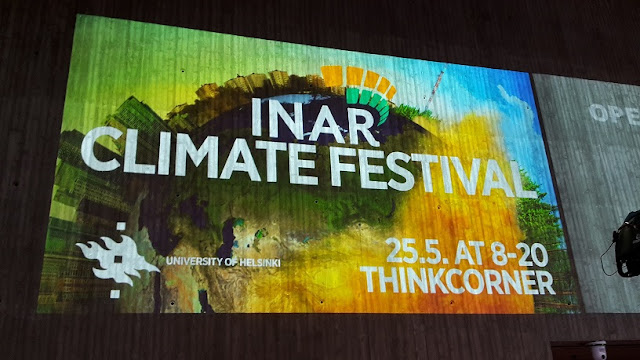
Figure 1. Wall projection in the Think Corner of the University of Helsinki during INAR Climate Festival (Picture: Arnaud Praplan, CC-BY-4.0 ) The INAR Climate Festival took place on 25 May in the Think Corner of the University of Helsinki. It was a large event meant to inaugurate the new Institute for Atmospheric and Earth System Research (INAR) and present its important research to society.  Among the guests for the inauguration were former President Tarja Halonen, Jukka Kola (Rector of the University of Helsinki), Kaarle Hämeri ( Chancellor of the University of Helsinki) , Juhani Damski ( FMI Director General) , Jari Gustafsson ( Permanent Secretary at the Ministry of Economic Affairs and Employment) and Erja Heikkinen (Science Adviser at the Ministry of Education and Culture), displaying the many connections and large impact of INAR in society: education, research, business. All guests were stressing how INAR is an important platform to understand and po...